Get the ducts out of a 130 degree attic
Spray foam insulation in Charlotte, North Carolina
Air seal and insulate in one pass, and move the boundary of the house to where it belongs. Serving Charlotte and the rest of Mecklenburg County.
- Someone answers, any hour, any day
- Free assessment, no obligation
- Told plainly when foam is the wrong buy
- Licensed North Carolina contractors
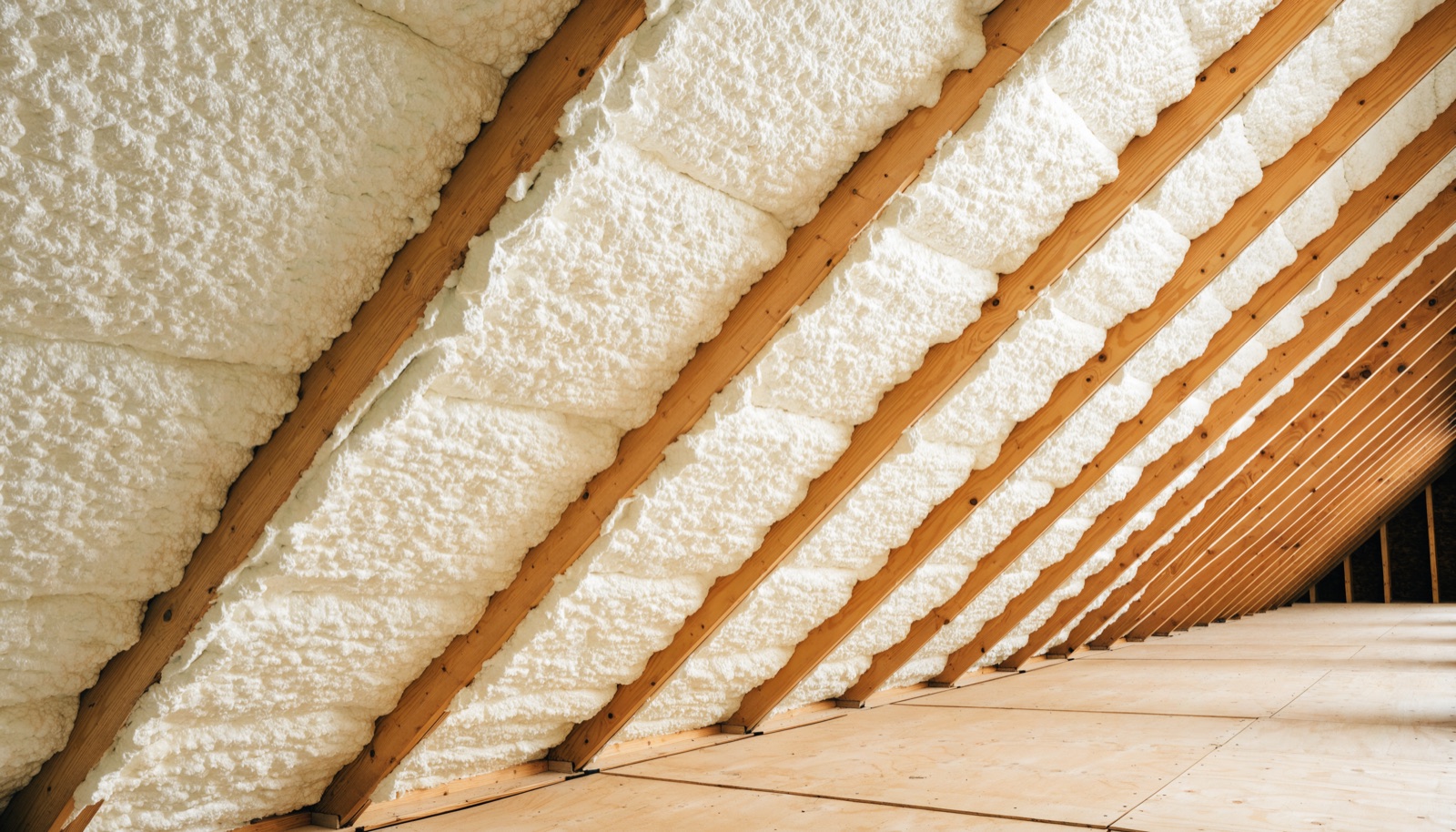
Spray foam insulation is applied as a liquid that expands in place and bonds to whatever it touches, which means it insulates and air seals in the same pass instead of leaving the gaps around the edges where most of a house actually leaks. In Charlotte the reason to care is almost always the attic. This is climate zone 3A, hot and humid from June to September, and the standard local build puts the air handler and every duct run inside a vented attic that passes 120 degrees on a July afternoon. Cold air travels through that space before it reaches a single register. Insulating the roof deck rather than the attic floor brings the whole attic inside the house, and the ducts stop fighting the weather. Where there is no ductwork up there, sealing the attic floor and adding blown insulation is usually the better buy, and that is worth being told before anyone quotes foam.
What spray foam actually does to a house
Spray polyurethane foam is applied as a liquid that expands in place, filling the cavity it is sprayed into and bonding to everything it touches. That single property is what separates it from batts and blown material: it insulates and air seals at the same time, in the same pass, and it does not leave the gaps at the edges where most of a house's air leakage actually happens.
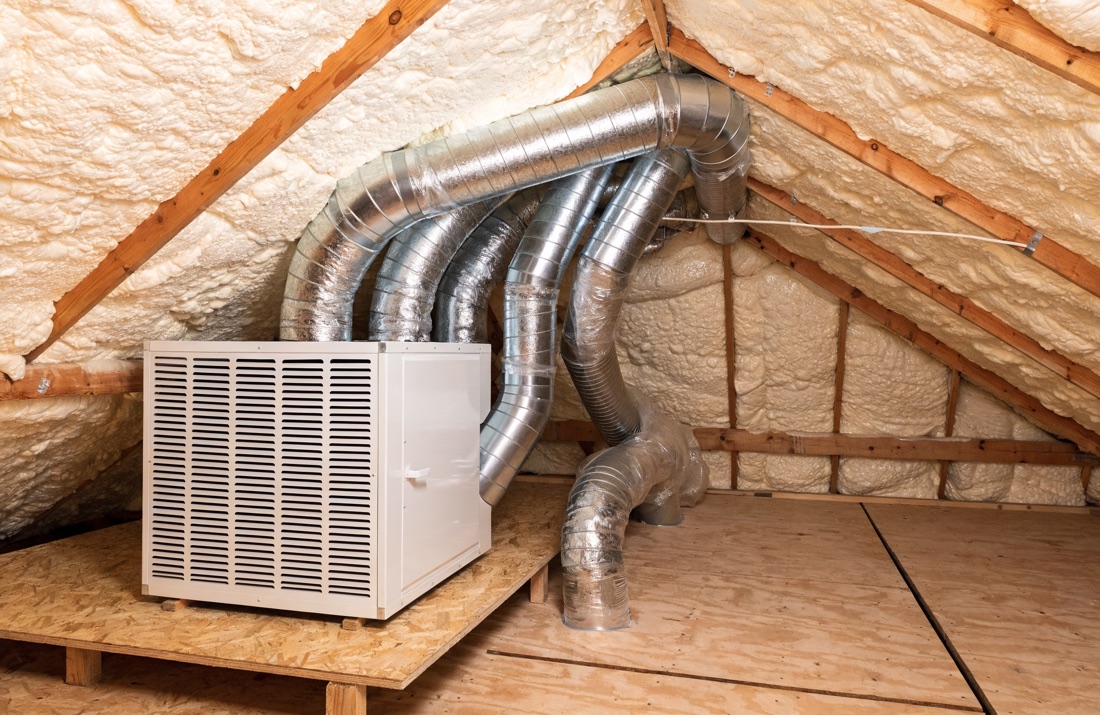
In this climate the compelling use is the attic. Charlotte sits in climate zone 3A, hot and humid through the summer, and the standard local construction puts the air handler and the duct runs in a vented attic. On a July afternoon that space is running well over 120 degrees while those ducts try to deliver cold air through it. Insulating the roof deck instead of the attic floor brings the whole attic inside the conditioned envelope, and the ducts stop fighting the weather.
It is not the answer everywhere. An accessible attic floor with no ductwork in it, no knee walls and no comfort complaint is usually better served by sealing the penetrations and adding blown insulation on top, for a fraction of the money. Any contractor who reaches for foam before asking where your ducts run has not looked at the actual problem.
Square footage is only one input. Foam type, depth, roof pitch, how much old material has to come out and what is found once someone is up there all move the number, which is why an honest figure follows a look in the attic rather than preceding it.
Signs your insulation is the problem
- An upstairs that will not hold temperature no matter what the thermostat says
- Air handler and duct runs sitting in a vented attic
- A bonus room over the garage that is unusable two months a year
- Summer power bills out of line with neighbors in similar houses
- A new build or an addition where the envelope is still open
Services
Spray Foam Insulation
Air seal and insulate in one pass, and move the boundary of the house to where it actually needs to be.
Open-Cell Spray Foam
The lighter, cheaper foam. Air seals well, stays vapor-open, and lets a roof leak show itself.
Closed-Cell Spray Foam
Dense, high R-value per inch, and a vapor retarder in its own right. The right call where depth is limited.
Sealed Attic & Roof Deck
Insulate the roofline instead of the ceiling, and bring the ductwork inside the house.
Air Sealing & Blower Door Testing
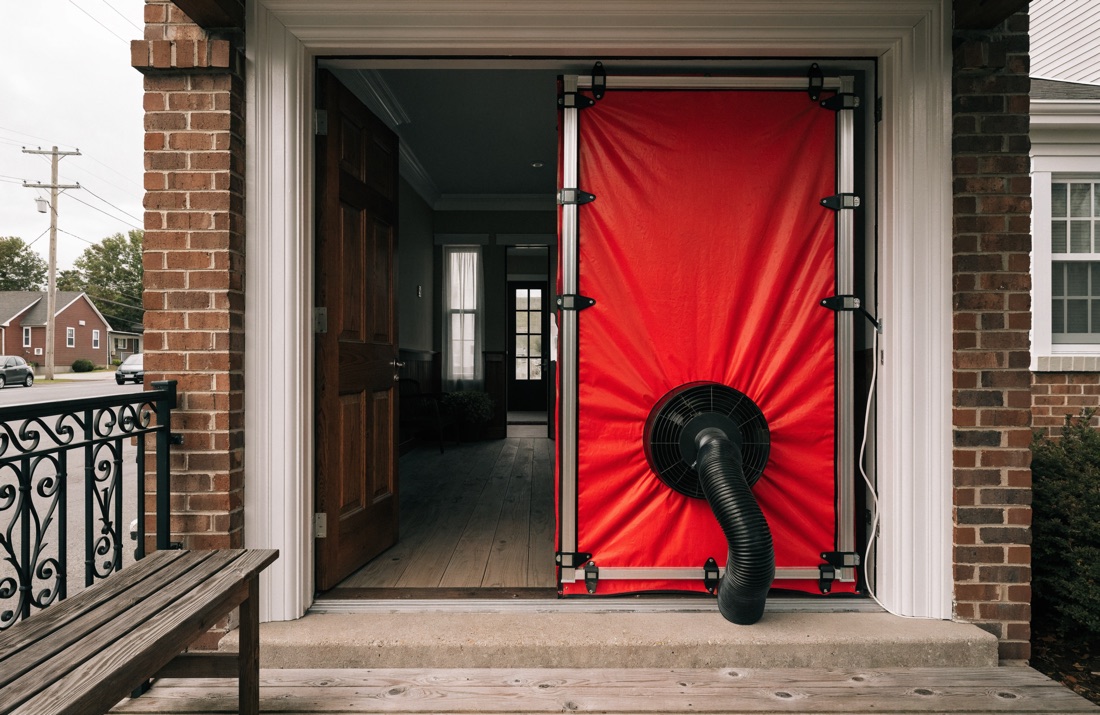
Measure the leakage, seal the paths that matter, and find out whether you need foam at all.
Insulation Removal & Replacement
Clear out contaminated, wet or rodent-damaged material before anything new goes in.
Where we work
One county, covered properly. Mecklenburg County and the towns immediately around it.
How we approach the job
The ducts are usually the problem
Most houses here run their air conditioning through a vented attic that hits 130 degrees in July. Where the insulation goes decides whether those ducts are inside the house or outside it.
Open cell and closed cell are not interchangeable
They cost different money, hold different R-value per inch, and behave differently when a roof leaks. Being told which one your job calls for, and why, is the point of the visit.
Licensed local work
Every job is carried out by a licensed North Carolina contractor working Mecklenburg County. Verify any license yourself before you sign.
Foam is not always the right answer
An attic floor that just needs air sealing and more blown insulation is a far cheaper job. Hearing that from someone who installs foam for a living is worth the call.
Common questions
How long does an attic take?
Most single-family attics in Mecklenburg County are sprayed in one day. Preparation, masking and removing old material take longer than the foam itself, and the house needs to be vacated during application and for the re-occupancy period the manufacturer specifies.
Is the smell permanent?
No. Properly mixed and applied foam cures and is inert. A persistent odor weeks later points at a mix ratio or temperature problem during application, which is an installation failure rather than a property of the material, and it is difficult and expensive to remedy. That is the strongest argument for checking who is holding the gun.
Will my house be too tight?
A house can absolutely be sealed tighter than it can passively breathe, and in that case it needs mechanical ventilation, which is a normal and inexpensive part of the job. The failure mode worth avoiding is sealing the house and skipping that step.
Does it pay for itself?
Sometimes, over years, and anybody quoting you a specific payback month is guessing. The more honest reason people do this here is the comfort of the upstairs rooms and getting the ducts out of a 130 degree attic.
Get a quote on your spray foam insulation
Call and tell us what is going on with your spray foam insulation and where the property is. You will get a straight answer on what it actually needs, from a licensed contractor working Mecklenburg County.
Call (980) 944-8316